
POS and payment mistakes small businesses keep making
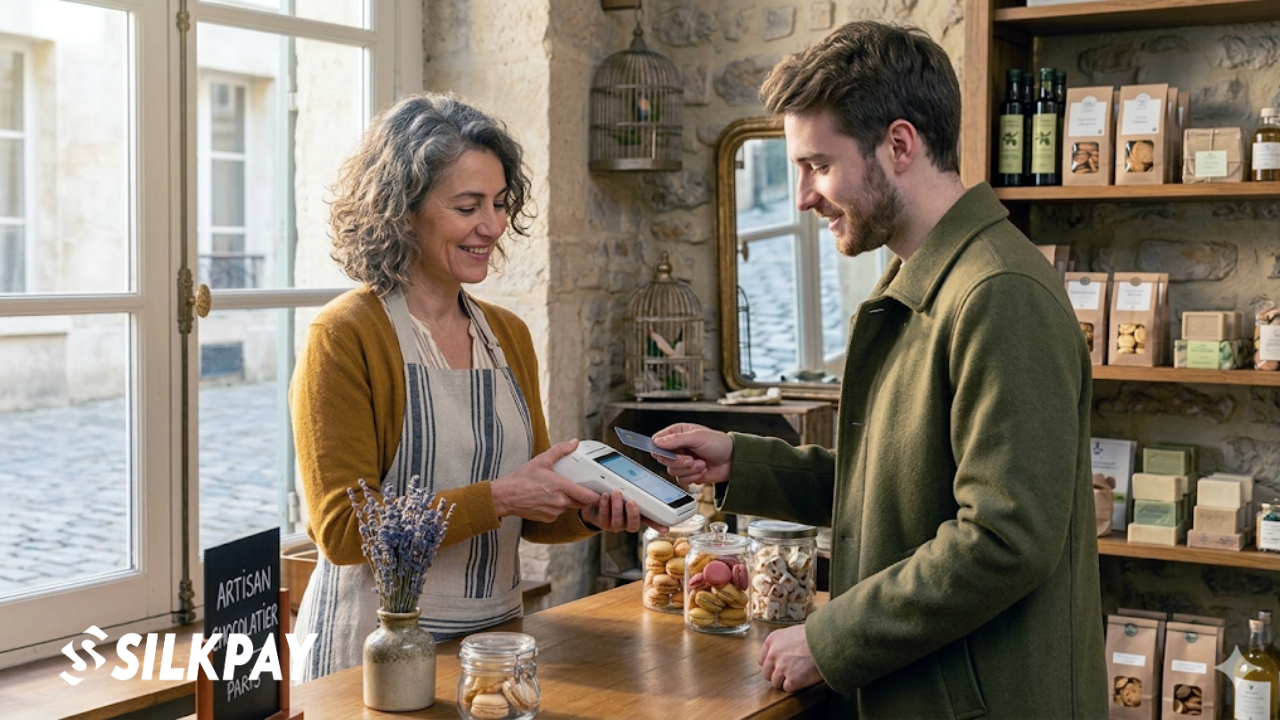
Have you ever faced this situation as a merchant? It is a busy weekend afternoon and a lot of customers fill your store. You notice the checkout line grows longer, those waiting to pay are becoming frustrated, and others abandon their purchase because you do not support their preferred payment method.
But even in all this chaos, many merchants just tell themselves: "Most customers can pay successfully anyway, so I will just manage for now!"
That’s because many small and medium businesses made an incorrect decision during their first choice of payment options and felt reluctant to change it. Perhaps they only looked for the plan with the lowest rate or opted for a payment gateway they heard about from someone without doing research.
These mistakes often impact more than just one transaction. They directly hurt the customer experience, the total revenue each month, and even the potential for future expansion.
This article lists the 5 most common payment decision mistakes made by small businesses and their impact on store performance. Then we will provide practical solutions to help European merchants avoid these traps, turning your payment process into a growth engine.
The lower the commission, the better
Many merchants focus solely on the lowest possible commission when they choose a payment solution. This represents a "short-term cost first" mindset. They often ignore the long-term impact of the transaction experience, system stability, and customer convenience.
Why this is a mistake:
Hidden costs outweigh minor savings:
the cost of failed payments during peak hours, wasted staff time, and lost orders exceeds the few cents saved on fees on each transaction.
Missed long-term value:
very low-cost solutions often lack the features that build customer satisfaction and make the payment system itself secure and stable.
How to avoid it:
Analyze the total value of the service:
evaluate long-term ROI, balance the transaction rates with the payment success rate and the quality of the customer experience.
Prioritize system stability:
invest in a robust payment gateway that maintains peak performance during sales events and holidays. A resilient payment system minimizes failed attempts, and ensures that your traffic successfully transforms into converted clients.
Attention to the full cost structure: low-cost providers often hide costs elsewhere. High withdrawal fees and steep chargeback penalties can soon offset initial savings and push up your total cost.
💡Recommendation: Choose the PAX A920Pro, the latest payment terminal model. Easy to operate, wireless, with a long lasting battery and a proven high performance even in peak business hours.
Focus only on the payment preferences of existing customers
Merchants often underestimate their potential foot traffic, they use "past customers" to determine "future business." They aim to satisfy current needs but ignore the payment habits and requirements of potential clients.
Why this is a mistake:
Neglecting new customers limits business growth:
different types of shoppers prefer different payment solutions, this oversight often leads to stagnant revenue.
Ignoring payment preferences costs competitive advantage:
shoppers will quickly pivot to a competitor if they offer a more familiar checkout experience unless your product cannot be found anywhere else, which is unlikely for most businesses nowadays!
How to avoid it:
Test new markets with minimal risk: Merchants don’t need expensive hardware to explore new customer preferences.
💡 Recommendation: if you want to accept payment from global customers at the lowest cost possible, Silkpay offers 2 solutions:
Silkpay app (Android/iOS): works like a payment terminal for accepting All Asian e-wallets (Alipay+, WeChat Pay, UnionPay Yunshanfu) as well as payment links for card and e-wallets payments.
SoftPOS app: Works as a card reader. Merchants can take Visa Mastercard payments with it.
To benefit from Silkpay’s no hardware solution, register to open a payment account now.
Once a payment solution is chosen, it never needs to change
Many merchants believe that once a system is installed, it will serve them forever. This reflects a "set it and forget it" cognitive bias. They underestimate how business expansion, menu changes, or new sales channels require a flexible payment system.
Why this is a mistake:
Business needs to evolve constantly:
your store might expand, your product list might grow, or you might add new sales channels. An outdated payment solution cannot support these new business requirements.
Scaling becomes difficult: a rigid system creates a bottleneck when you try to open a second location or move into e-commerce.
How to avoid it:
Review and update your payment system regularly:
for a shift from fixed-price models to high-volume sales or complex inventory management, upgrade to a more intelligent and efficient POS system.
If an increase in international visitors is observed, activate global wallets (Alipay+, WeChat Pay) via your Silkpay account.
If repeat customers decline, then assess whether the buying experience has become complicated for them or outdated.
If your business expands into new regions, then adapt payment options to local preferences.
If peak hours create long queues, then introduce faster, contactless payment flows.
If fraud or chargebacks increase, then change to a more secure payment gateway that prevents fraud.
Consider a payment solution just as a tool to collect money
Many merchants view occasional transaction failures as minor accidents. This is also a common logical error. It separates the customer experience from the transaction process. In reality, the payment experience directly affects purchase decisions and customer satisfaction.
Why it is a mistake:
Underestimating payments as the final brand touchpoint:
it serves as the critical endpoint of the customer journey. Any friction such as system lags or repeated card failures, leads to order loss at the last second. Even if your products and environment are good, a poor payment experience reduces customer satisfaction and repeat visits.
Ignoring the impact of operational efficiency on profit:
when you view payment only as a back-end tool, you ignore its effect on staff efficiency and daily customer turnover. During peak hours, a slow terminal creates a checkout bottleneck. This directly limits the number of customers you can serve and reduces your total daily revenue.
How to avoid it:
Select high performance hardware:
Take the PAX A920 Pro provided by Silkpay as an example. This payment terminal records the highest positive feedback with 98% of merchants saying that they would purchase or rent it again if they need an additional terminal. Silkpay’s single POS terminal solution allows you to serve around 2 billion customers from all over the world.
The lightning-fast checkout process, the Asian e-wallets integration on top of other payment methods, the long lasting battery, the minimal operational issues and the portability are the TOP 5 winning features our merchants like about our PAX A920Pro solution.
Train your staff to be payment experts:
Ensure every employee can operate the payment system with proficiency. They must handle various payment exceptions with confidence and speed. Professional management by staff can turn a frustrated client into a loyal customer who trusts your store.
More payment methods always mean better results
This is a classic "feature stacking" mindset. Many merchants think it is an advantage to open payment accounts at different gateways just in case of need.
However, they ignore the actual management costs and the time required for staff training. Too many fragmented payment methods lead to complex operations and messy settlements. This actually reduces overall efficiency.
Why this is a mistake:
Management of multiple systems is complex:
staff members make errors more easily when they must navigate different interfaces.
Settlements take longer:
when payments come from many different payment gateways or providers, money arrives at different times, reports don’t match, and someone has to spend extra hours figuring out what was paid, what’s missing, and what belongs where.
How to avoid it:
Use a unified platform to integrate all needed payment methods: choose a solution like Silkpay that consolidates all needed solutions for both online and in-store payments into one single interface. Focus on one trustworthy payment gateway that offers everything your target customers actually need instead of chasing every available option and losing in costs along the way.
Silkpay makes sure your sales are never interrupted for any reason. Let’s suppose you forgot to charge your POS terminal and it ran out of battery, then you can simply continue accepting payments via Silkpay app or SoftPOS from your smartphone. If your Website has issues for example, then you can simply generate a payment link from your Silkpay backoffice, POS terminal or Silkpay app and send it to your customers to complete the transaction.
Silkpay’s solution is engineered to cover every payment scenario your business needs.
Keep operations simple and easy to train:
ensure the system allows new staff to learn the process quickly and handle transactions without confusion.
Conclusion:
The payment experience is more than just a technical process, it is the final touchpoint of your business. Every slow transaction, failed payment, or confusing process can erode trust, reduce revenue, and limit your ability to expand.
In the end, the common thread behind these mistakes is not about the wrong product, it’s about wrong mindset and decision making. Merchants focus on short term benefit without realizing that these choices directly impact operational efficiency, customer satisfaction, and future growth.
By rethinking how you evaluate payment solutions, merchants can turn their payment system into a real growth engine.
About the author: Silkpay
Based in Paris, Silkpay provides omnichannel and secure payment solutions to help physical stores and e-commerce in Europe and the Americas accept more than 30 of the world's most popular payment methods: Visa, Mastercard, CB, UnionPay, Alipay+, WeChat Pay as well as Asia-Pacific’s major e-wallets.
Silkpay is a winner of the LVMH Innovation Award. The company was also selected as a finalist for the "Money 20/20" Best Startup and in the "MPE Berlin” Startup Awards. Silkpay also won the "Best Fintech" awards from Capgemini and BPCE.
Silkpay helps merchants deliver the smoothest payment experience to their customers. We are a talented and international team driven by a single goal: to improve the customer experience and make payments simple and secure.