
How much does a payment terminal really cost?
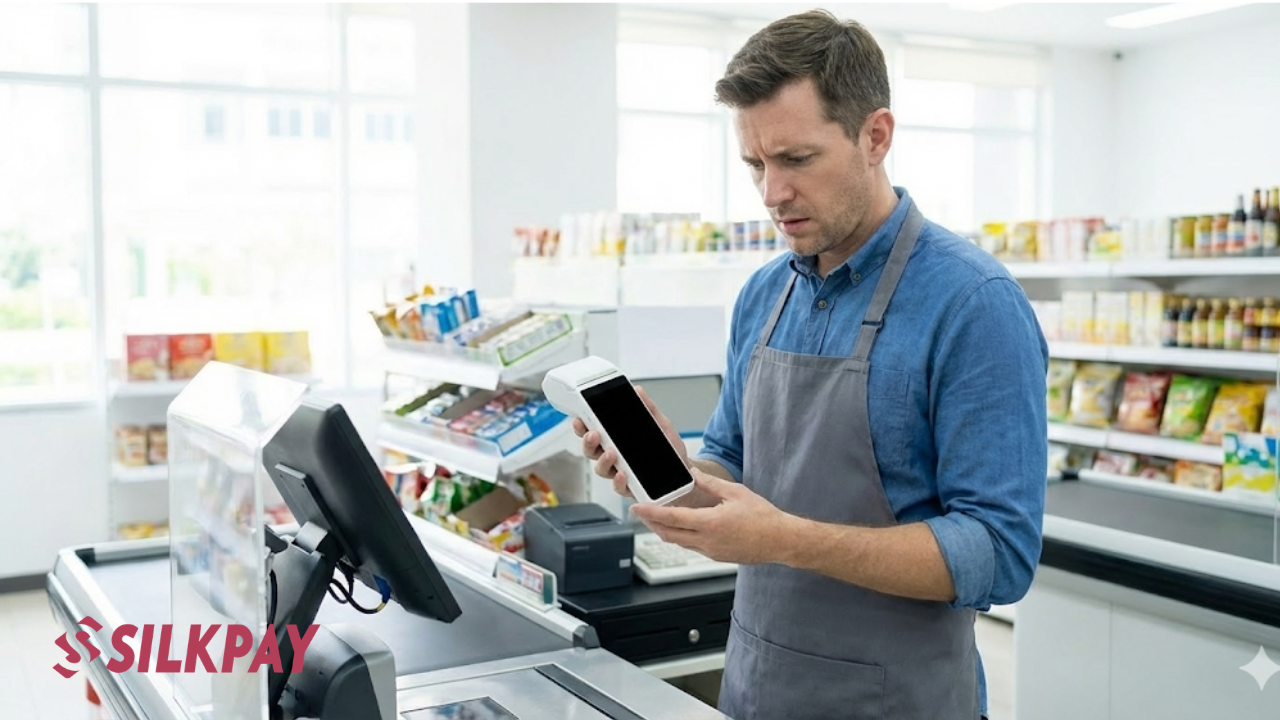
Let’s suppose that you've just opened your new café in Barcelona. You've selected what seems like the perfect POS terminal advertised as "€0 upfront".
Three months later, however, your financial reports tell a different story. Monthly fees are higher than expected, settlement times are slower than promised, and certain payment methods cost more than you anticipated.
When you finally decide to change to another solution, you found out there’s a minimum rental period of 36 months. The terminal itself wasn’t expensive, but the payment ecosystem behind it turned out to be far more complex than it appeared.
For European merchants, the true cost of a POS machine isn't just about the hardware price, it's about understanding the entire ecosystem of payment processing.
In 2025, the European Payments Council reported that 68% of SMEs overpay by 23%+ on their payment processing, not because of "hidden fees" alone, but because they lack visibility into how payment infrastructure actually works.
In this article, we will break down the real cost structure behind POS terminals for merchants. Beyond hardware cost, we examine several factors that influence the total cost.
By understanding how payment infrastructure actually works, merchants can better evaluate whether a POS solution is truly cost-effective
Hardware costs: total cost of ownership
Purchase vs. lease
The initial layer of expense for a POS terminal is the hardware itself.
In Europe, we have two primary models (purchase or lease).
💡Merchants should know that Monthly fees alone do not tell the whole story. They should evaluate the costs included in the contract terms before signing. Many European payment service providers bundle their leases with a mandatory 36-month lock-in period.
What is a contract lock-in period?
This refers to a minimum rental period set within the lease agreement. Merchants need to be committed to a specific duration, which then automatically renews unless the merchant provides formal notice in advance.
Consequently, the merchant cannot terminate the contract or switch equipment at will without facing penalties or being forced to pay out the remaining balance.
For instance, a "cheap" lease at €30 per month could cost €1,080 over the full term, and the merchant never gains ownership of the device.
Silkpay’s payment terminal offer: flexibility and control
Silkpay provides a versatile plan for POS terminals. When you lease via Silkpay, there is a lock-in period of only 1 year. Merchants only need to notify us three months before they want to cancel.
This eliminates the financial strain of long-term commitments and better serves the needs of European SMEs that prioritize flexibility, particularly beneficial for businesses with seasonal traffic or those still testing the waters of cross-border payment growth.
For businesses that prefer long-term ownership, Silkpay offers a direct purchase option. A one-time purchase typically reaches its breakeven point after 12 months.
This is an ideal choice for established retail, catering, and tourism businesses.
Using the PAX A920 Pro from Silkpay as an example, merchants can choose between:
One-time purchase: €590 per unit
Monthly lease: €49 per month
The PAX A920 Pro features wireless connectivity and long battery life. It operates reliably at restaurant tables, inside retail shops, or in mobile sales environments to ensure that frequent charging never interrupts checkout efficiency.
💡When you analyze cost structures, the presence of a contract lock-in period is often more critical than the monthly fee itself. A flexible and transparent rental mechanism allows you to adjust your strategy based on business performance rather than being trapped by an equipment contract.
Transaction fees
Not all payments carry the same cost!
Transaction fees are generally a composite of multiple charges rather than a single fee from your payment provider. A standard fee structure for a single transaction typically includes:
Card scheme fees
Interchange fees
Acquirer markup
What are card scheme fees?
Paid to the card networks (e.g., Visa, Mastercard). These cover network processing and brand usage.
Card schemes such as Visa, Mastercard, or UnionPay do not serve merchants directly. Instead, merchants need to go through payment gateways, such as Silkpay, to be able to accept payments in their stores.
These card schemes charge a network usage fee for every transaction processed. This cost is a fixed industry standard, and no payment service provider can waive it.
What are Interchange fees?
Paid to the card-issuing bank (the customer’s bank).
Usually the largest portion of the fee.
Varies by card type (credit, debit, rewards), transaction type (online vs in-person), and region.
What is Acquirer Markup?
Paid to your acquiring bank or payment processor.
This is their profit margin plus processing costs.
Sometimes includes gateway fees and risk management costs.
Common pricing models
Depending on your payment provider, these components are bundled differently:
Interchange++
Interchange + Scheme Fees + Acquirer Markup (all separated and transparent)Blended Pricing (e.g., 2.9% + 0.30€)
The fee consists of a percentage of the transaction amount (largely based on interchange set by the card networks and issuing banks) plus a fixed per-transaction charge set by your payment processor.
💡Silkpay offers the best customized commission fees for every merchant. When you use a Silkpay POS terminal, you benefit from our direct expertise in international processing.
The settlement cycle trap
T+2 clearing does not guarantee T+2 fund availability. In fact, funds must navigate several stages after a payment or transaction is successful.
Card scheme clearing, intermediary bank processing, and cross-border settlement audits. If any stage coincides with a weekend, public holiday, or batch processing delay, the actual time it takes for money to reach your bank account can stretch to 3–5 business days or longer.
This delay is particularly frequent with Asian payment methods, as cross-border transactions rely on more complex clearing networks.
The impact on small businesses
For large retail chains with deep cash reserves, these delays are merely a line item on a financial statement. For small and medium-sized merchants, however, a longer settlement cycle creates genuine financial strain:
Restaurants require daily cash turnover to pay for fresh ingredients and labor costs.
Retailers need fast access to funds to replenish inventory.
Tourism and Seasonal Businesses have highly concentrated revenue periods and are more sensitive to fund availability.
When a payment provider advertises a "clearing cycle" without clarifying the "actual arrival time," merchants often only discover the impact on their cash flow after the contract is signed.
This is why more European merchants are prioritizing transparency in the fund path over surface-level transaction rates.
Exchange rates and multi-currency conversion
When a customer pays in their own currency, their bank or digital wallet usually converts the payment to the merchant’s currency. This conversion often includes a spread, which is typically paid by the customer.
Some payment providers, however, settle automatically in the merchant’s currency using their own exchange rate. In doing so, they take a cut before the merchant receives the funds, meaning the merchant may receive slightly less than the true market rate.
Thus, as a merchant, you can indirectly “pay” for conversion spreads, even when the customer has technically paid the full amount. How much this affects you depends on how the payment provider handles settlement.
For merchants, transparency in currency conversion is, therefore, so important. Understanding how exchange rates are set, and how they affect final settlement amounts is essential to evaluating the true cost of any POS or payment solution.
💡With Silkpay, merchants never bear exchange rate costs. This means you don’t have to worry about hidden currency conversion fees.
Conclusion
For European merchants, choosing a POS terminal is no longer a simple hardware decision. It is a financial commitment that affects daily cash flow, operational flexibility, and long-term profitability.
What appears affordable on the surface can quickly become costly when lock-in contracts, settlement delays, and non-transparent exchange rates are taken into account.
The key takeaway is clarity. Merchants who understand where costs originate from device ownership models to transaction routing and fund settlement are better positioned to make informed decisions that match their business reality.
This is especially critical for SMEs, hospitality businesses, and merchants serving international customers, where margins and cash availability matter every day.
Silkpay addresses these challenges by prioritising transparency and flexibility. With contract-free leasing options, clear transaction structures, and expertise in cross-border payments, merchants gain control over both their payment infrastructure and financial outcomes. As payment ecosystems grow more complex, visibility into true costs is essential for building a resilient business.
About the author: Silkpay
Based in Paris, Silkpay provides omnichannel and secure payment solutions to help physical stores and e-commerce in Europe and the Americas accept more than 30 of the world's most popular payment methods: Visa, Mastercard, CB, UnionPay, Alipay+, WeChat Pay as well as Asia-Pacific’s major e-wallets.
Silkpay is a winner of the LVMH Innovation Award. The company was also selected as a finalist for the "Money 20/20" Best Startup and in the "MPE Berlin” Startup Awards. Silkpay also won the "Best Fintech" awards from Capgemini and BPCE.
Silkpay helps merchants deliver the smoothest payment experience to their customers. We are a talented and international team driven by a single goal: to improve the customer experience and make payments simple and secure.